Lights on the Dashboard, Eyes on the Road: Navigating Vehicle Warning Signals During Your Road Test
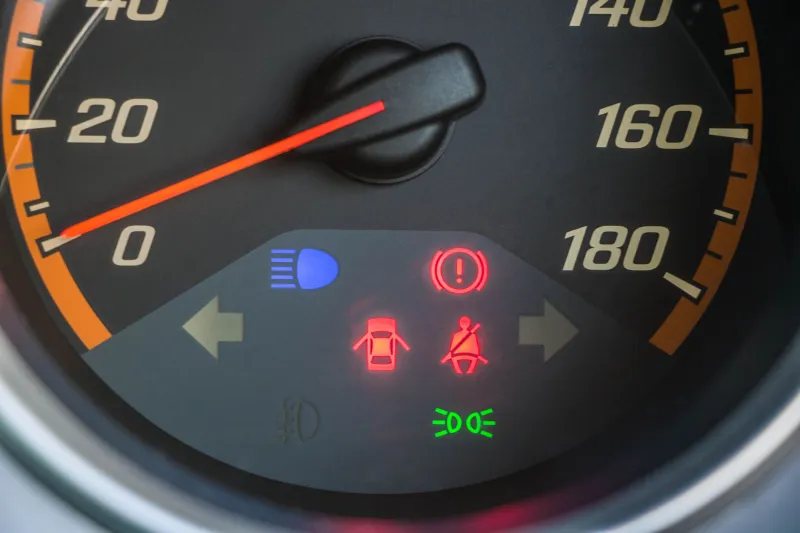
Few moments during a road test are as disorienting as the sudden amber or red glow of a dashboard warning light. Your palms tighten, your focus fractures, and somewhere in the back of your mind, a voice asks whether the test is already over. The reality, however, is considerably more nuanced than that moment of panic suggests.
At Redin Motor School, we prepare drivers not only for ideal testing conditions but for the unpredictable ones. Understanding how vehicle warning lights interact with your road test outcome — and how examiners are trained to respond to them — is a component of licensing preparation that most candidates never consider until it is too late.
Why Examiners Care About Your Vehicle, Not Just Your Driving
A road test is not solely an evaluation of your ability to operate a vehicle. It is also an assessment of your judgment, your situational awareness, and your capacity to make sound decisions when circumstances shift. The condition of the vehicle you bring to the test is part of that evaluation, even before you pull out of the DMV parking lot.
In most US states, examiners conduct a brief pre-test vehicle inspection. This typically includes verifying that headlights, brake lights, turn signals, and the horn are all functional. Some states will also check that the windshield is free of obstructions and that mirrors are properly positioned. If your vehicle fails this preliminary check, the test may not proceed at all — not because the examiner is being rigid, but because a vehicle with compromised safety systems cannot legally be used for a licensing evaluation.
This is why the most important dashboard conversation happens before the test begins, not during it.
Conducting a Serious Pre-Test Vehicle Inspection
The week before your scheduled test, commit to a thorough inspection of the vehicle you plan to use. This is not a casual walk-around — it is a structured review.
Check your fluid levels. Low oil pressure or coolant warnings are among the most common mid-test surprises. Top off oil, coolant, and brake fluid before test day.
Examine your tire pressure. The tire pressure monitoring system (TPMS) light is one of the most frequently illuminated warnings on modern vehicles. A low-tire warning during a test can distract both you and the examiner, and in some states, it may prompt the examiner to pause or terminate the evaluation.
Verify your battery and charging system. A battery warning light that appears mid-test signals a potentially serious electrical failure. Have your battery tested at any auto parts store — most will do it free of charge.
Clear any pre-existing check engine lights. This is where many drivers make a critical mistake. A check engine light that was already on before the test began is treated differently by examiners depending on the state. In some jurisdictions, any illuminated warning light is grounds for immediate disqualification. In others, examiners have discretion. Do not assume yours falls into the lenient category.
The Hierarchy of Warning Lights: What Examiners Actually Do
Not all warning lights carry equal weight during a road test. Understanding the informal hierarchy that most examiners operate within can help you contextualize what you are dealing with if a light appears.
Red warning lights — such as brake system failures, oil pressure warnings, or battery alerts — are treated as serious safety concerns. If a red warning light illuminates mid-test, most examiners will direct you to pull over safely and end the evaluation. This is not automatically scored as a failure in the traditional sense; it is typically recorded as an incomplete test, meaning you will need to reschedule rather than having a failing score on your record.
Amber or yellow warning lights — including TPMS alerts, stability control warnings, or traction control indicators — are handled with more discretion. An examiner who sees an amber light appear may ask you about it, note it, or in some cases continue the test if the vehicle is otherwise performing normally. Your response to that moment matters.
Service reminder lights — oil change due, service required — are generally not treated as safety-critical and are unlikely to affect your test outcome. That said, having them present reflects on the overall condition of the vehicle you chose to bring.
Responding With Composure: What Examiners Are Actually Watching
Here is the element of this situation that most driving guides overlook entirely: how you respond to a warning light is itself being evaluated.
A driver who freezes, begins apologizing profusely, or swerves erratically upon noticing a dashboard alert is demonstrating exactly the kind of reactive behavior that examiners flag. Conversely, a driver who calmly acknowledges the light, maintains their lane position, and says something measured — such as, "I'm noticing the TPMS light has come on; I'd like to pull over safely when it's appropriate to check" — is demonstrating the kind of composed problem-solving that characterizes a genuinely road-ready driver.
This is not a performance. It is a reflection of the instincts you have built through preparation. Examiners are human beings trained to assess judgment, and a thoughtful, calm response to an unexpected vehicle event can actually reinforce a positive impression, even in an otherwise imperfect test.
The Day-Of Protocol If a Light Appears
If a warning light appears during your road test, follow this sequence:
- Do not panic visibly. Maintain your lane, your speed, and your scanning pattern.
- Acknowledge it internally. Identify whether it is red or amber and recall what it likely means.
- Notify the examiner calmly. You are not obligated to remain silent. Informing the examiner shows situational awareness.
- Follow their direction. The examiner will decide how to proceed. Your job is to execute their instruction safely.
- Do not catastrophize. In many cases, the test continues. In others, it is rescheduled — not failed.
The vehicle you drive to your road test is a reflection of your preparation. Treat its condition with the same seriousness you apply to your parallel parking or your three-point turns. A well-maintained vehicle, a calm temperament, and an understanding of what warning lights actually mean will ensure that a blinking dashboard does not become the reason you leave the DMV without a license.