You Passed — So Why Does the Steering Wheel Still Feel Foreign? The New Driver's Guide to Earned Confidence

You studied. You practiced. You sat through the test with clammy hands and a heart rate that probably should have been medically documented. And then, somehow, you passed.
The examiner handed back your paperwork with a nod. You drove home — carefully, deliberately, aware of every mirror check — and somewhere between the DMV parking lot and your driveway, a quiet, uncomfortable thought surfaced: I'm not sure I actually know what I'm doing.
If that thought sounds familiar, you are not alone. And more importantly, you are not wrong to have it.
The Gap Between the Test and the Road
A road test is a structured evaluation conducted on a predetermined route, in a controlled time window, with a trained professional seated beside you. It measures a specific and relatively narrow set of competencies — signal use, lane positioning, speed management, basic maneuvers. It does not measure your ability to navigate an unfamiliar city at night, handle a sudden tire blowout on the interstate, or make a split-second decision when a child runs into the street.
This is not a flaw in the licensing system. It is simply the reality of what any standardized assessment can and cannot capture. The road test verifies that you have crossed a minimum threshold of competency. It does not certify mastery.
The problem arises when new drivers interpret their passing score as evidence of full readiness — or conversely, when they feel like frauds because they know, instinctively, that the license represents a beginning rather than an arrival. Both responses reflect a misunderstanding of what the license actually means.
What Psychologists Would Call It
The experience of feeling undeserving of a credential you legitimately earned has a name in psychological literature: imposter syndrome. Originally identified in high-achieving professional contexts, it describes the persistent internal sense that one's success is not reflective of genuine ability — that discovery of inadequacy is only a matter of time.
For new drivers, this manifests in specific, recognizable ways. You might avoid highway driving even though you are legally permitted to use it. You might decline offers to drive friends somewhere because the added responsibility feels overwhelming. You might rehearse routes mentally before getting in the car, or feel a disproportionate sense of relief when you arrive somewhere without incident.
These behaviors are not signs that you are a bad driver. They are signs that your confidence has not yet caught up with your credential — a gap that is entirely normal and, with deliberate effort, entirely closable.
Why the Feeling Is Actually Appropriate
Here is an opinion that may feel counterintuitive: the discomfort you feel after passing your road test is not a problem to be solved immediately. It is, in a meaningful sense, the correct response to your situation.
A new driver who feels fully confident after passing a road test is a driver who may be underestimating what they do not yet know. The research on novice driver crash risk is consistent across decades of traffic safety literature: the months immediately following licensure represent one of the highest-risk periods in a driver's lifetime, not because new drivers are reckless, but because confidence often outpaces competence during that window.
The driver who feels uncertain is, paradoxically, in a safer psychological position than the one who feels invincible. Uncertainty promotes caution. Caution promotes survival. The goal is not to eliminate the uncertainty immediately — it is to replace it, gradually, with competence that has been earned through accumulated experience.
A Graduated Framework for Building Authentic Confidence
Authentic driving confidence is not a feeling you can manufacture through positive thinking. It is a byproduct of deliberate, progressive exposure to increasingly complex driving environments. The following framework reflects the approach we recommend at Redin Motor School for drivers in the months following licensure.
Weeks one through four: Consolidate the familiar. Drive routes you already know, in daylight, in low-traffic conditions. The goal is not to expand your range but to build fluency in environments where the cognitive load is manageable. Fluency in familiar conditions is the foundation on which everything else is built.
Months two and three: Introduce controlled complexity. Begin driving during light traffic periods. Add one new type of road or intersection per week — a four-lane arterial, a rotary, a highway on-ramp. Do not attempt to master all of these simultaneously. Progressive, single-variable exposure allows your nervous system to calibrate without becoming overwhelmed.
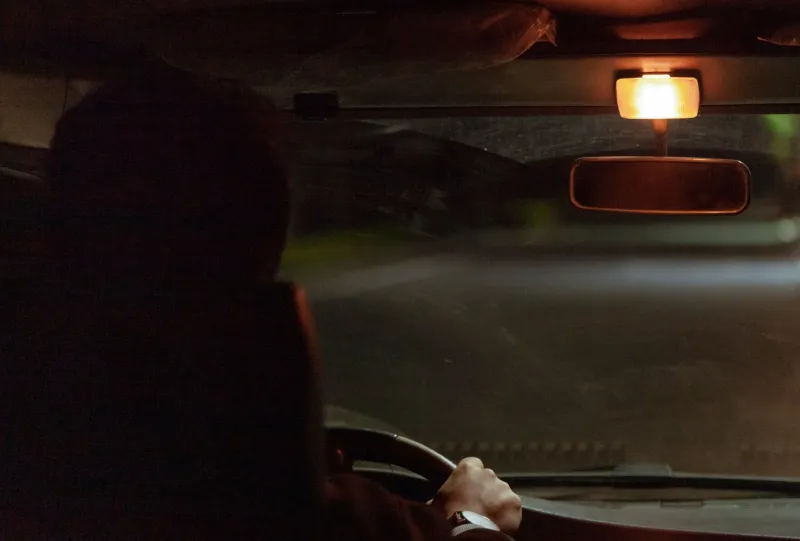
Months four and five: Engage with adverse conditions deliberately. Night driving, rain, and unfamiliar neighborhoods should be introduced intentionally during this phase — not avoided until circumstance forces them. A driver who encounters their first heavy rainstorm after six months of fair-weather driving is far less prepared than one who has practiced in light rain multiple times.
Month six and beyond: Reflect and recalibrate. By this point, most new drivers have sufficient experience to begin distinguishing between genuine skill gaps and residual anxiety. Honest self-assessment — perhaps facilitated by a refresher session with a professional instructor — can identify specific areas that merit continued attention.
When to Seek Additional Instruction
Passing a road test does not close the door on professional driving instruction. In fact, some of the most productive instructional sessions occur after licensure, when the stakes of evaluation are removed and the driver is free to focus purely on skill development.
If you find that your anxiety behind the wheel is not diminishing with experience — or if specific scenarios such as highway merging or parallel parking in traffic continue to feel unmanageable after several months — a structured lesson with a qualified instructor may be the most efficient path forward.
This is not an admission of failure. It is the decision of a driver who takes their own development seriously.
The License Is the Starting Line
The most honest thing anyone can say to a newly licensed driver is this: the road test was the beginning of your education, not the end of it. The credential you earned represents your eligibility to continue learning — on public roads, in real conditions, with real consequences.
The discomfort you feel is not evidence that you do not belong behind the wheel. It is evidence that you understand the responsibility you have accepted. Honor that understanding by continuing to grow into it. The confidence will come — not as a sudden arrival, but as a quiet accumulation of miles and decisions and mornings when you realize the steering wheel no longer feels foreign at all.