The Clutch Question: Is Manual Transmission Training Worth It for Today's Teen Drivers?
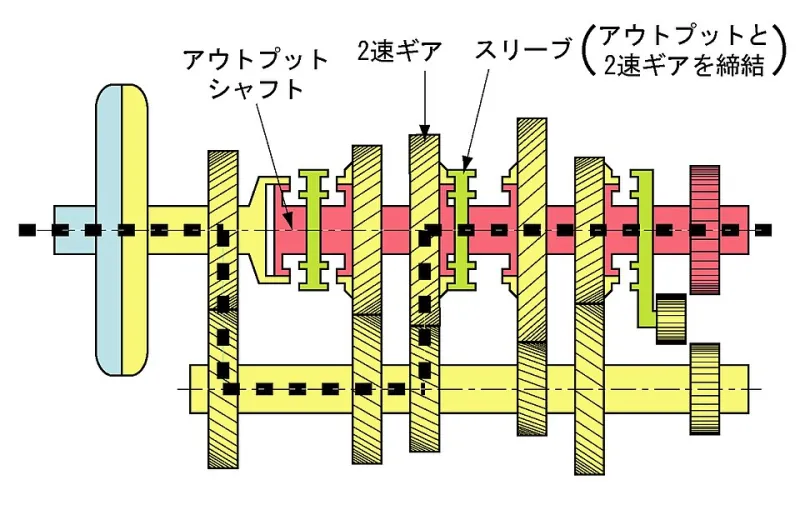
Photo: Yones, Public domain, via Wikimedia Commons
There was a time when learning to drive a manual transmission was a rite of passage — a skill passed from parent to teenager in an empty church parking lot, complete with the smell of a burning clutch and a lecture about patience. That era is ending. Manual transmissions now account for a small sliver of new vehicle sales in the United States, and fewer than one in five Americans can confidently drive one.
So when a parent asks us whether their teenager should learn on a stick, the honest answer is: probably not first — but maybe eventually. Here's our reasoning.
Learn on the Car You'll Actually Drive
The strongest argument against starting with a manual is simple pragmatism. The overwhelming majority of American teens will learn, practice, and test in an automatic. Training on a different kind of vehicle introduces an unnecessary layer of complexity — stall recovery, clutch friction points, hill starts — before the fundamentals of observation, positioning, and judgment have taken root.
Driver education works best when cognitive load is managed. A student wrestling with a clutch has less mental bandwidth available for scanning intersections, checking mirrors, and anticipating hazards. Those higher-order skills matter far more to lifelong safety than gear selection.
There's also a testing reality: your road test will almost certainly be taken in an automatic, and examiners evaluate universal competencies, not transmission preference.
The Case for the Stick
That said, dismissing manual training entirely would be a mistake, for three reasons.
First, competence breeds confidence. Drivers who learn to operate a manual often develop a deeper mechanical intuition — they understand what the car is doing, how engine braking works, and why smooth inputs matter. That sensitivity translates to better vehicle control in any transmission.
Second, opportunity costs are real. Manual skills open doors: rental cars abroad, emergency situations, older family vehicles, certain jobs in delivery and trades, and the simple freedom of being able to drive anything. A license that limits you to one transmission type is a license with an asterisk.
Third, the theft-deterrent and insurance angle — with caveats. You'll occasionally hear that manuals lower insurance premiums or deter theft. The theft argument is largely outdated, and insurers today price policies primarily on driver age, record, and vehicle type rather than transmission. Any savings are marginal. Don't learn to drive a stick for your premium; learn it for your capability.
A Sensible Sequencing Strategy
Our recommendation at Redin Motor School is a two-stage approach:
-
Learn and license on an automatic. Build core competencies — hazard perception, spacing, speed management — without the complication of shifting. Pass the road test with confidence.
-
Add manual proficiency as an elective skill. Once licensed, a handful of structured lessons in a manual vehicle can establish clutch control in a safe environment. Many schools, including ours, offer this as a supplemental module for newly licensed drivers.
This sequencing respects both reality and tradition. The teen gets licensed efficiently, then acquires a rarer skill deliberately rather than accidentally.
The Verdict
Manual transmission instruction isn't dead, but it has changed roles. It's no longer the default pathway to a license — it's an enrichment skill, like learning to read a paper map or change a tire. Valuable? Genuinely. Essential? No.
Learn to drive well first. Learn to drive everything second. In that order, the clutch becomes a bonus, not a barrier.