What Your Eyes Are Telling the Examiner Before You've Said a Word
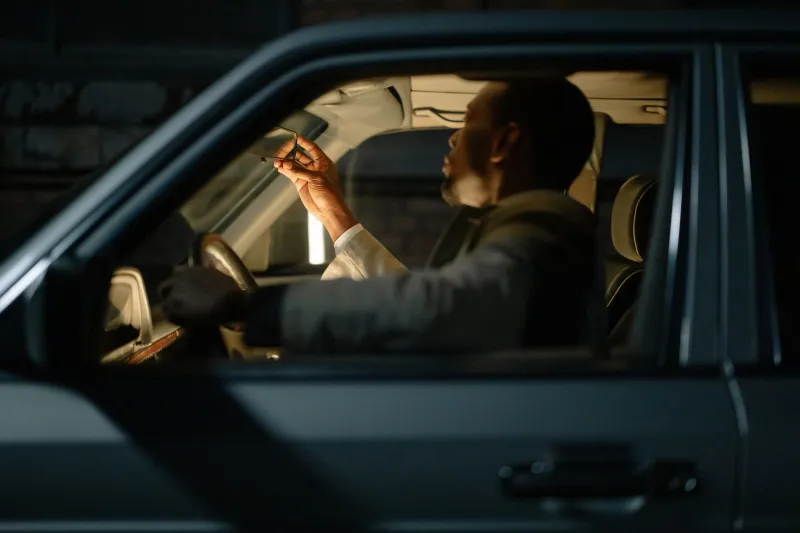
Before you have navigated a single turn, before you have demonstrated your braking technique, and before you have attempted parallel parking, the examiner sitting beside you has already begun scoring your performance. The instrument they are using is not a checklist — it is observation. And the primary subject of that observation is where your eyes are going.
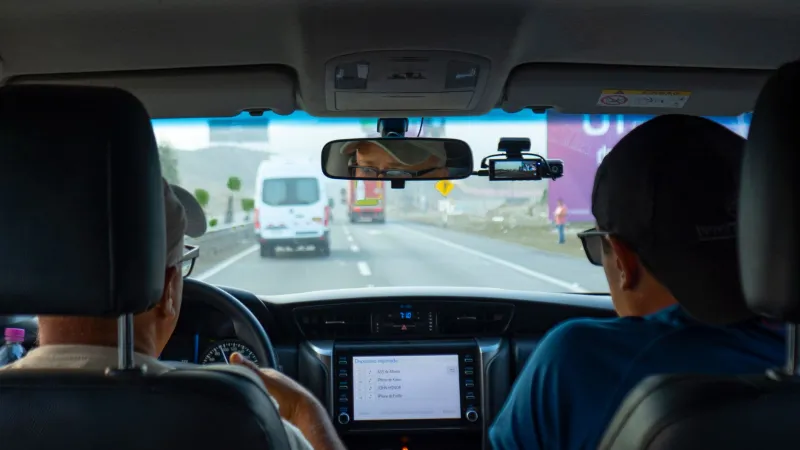
Mirror-checking behavior is among the most revealing indicators of a driver's actual competency level. Professionals in driver evaluation refer to this cluster of habits as "mirror intelligence" — a term that describes not just whether a driver checks their mirrors, but when they check them, how often, in what sequence, and what they appear to do with the information those checks provide.
Understanding this concept thoroughly may be the single most impactful adjustment you can make before your road test.
Why Sixty Seconds Is Enough
Experienced examiners do not need the full duration of a road test to establish a baseline impression of a candidate's awareness habits. In most cases, sixty seconds of observation during initial driving is sufficient to reveal whether mirror-checking is instinctive or performed.
The distinction matters enormously. Instinctive checking — the kind that results from genuine training and internalized habit — has a rhythm to it. It is consistent without being mechanical, timed to relevant events, and integrated seamlessly into the act of driving. Performed checking — the kind that new drivers execute because they remember they are supposed to — tends to be clustered, exaggerated, and disconnected from the actual traffic environment.
Examiners recognize the difference almost immediately.
The Optimal Checking Sequence
There is a standard mirror-checking sequence that defensive driving instruction in the United States has long advocated, and that road test examiners are trained to look for. It is sometimes referred to as the "scan cycle," and it operates as follows:
Routine scanning: Every five to eight seconds during normal forward travel, a driver should cycle through their center rearview mirror and both side mirrors. This is not a prolonged stare — each check is a brief glance that gathers information and returns focus to the road ahead.
Event-triggered checks: Certain driving actions require mirror verification immediately before they are executed. These include lane changes, turns, merges, stops, and any acceleration from a stationary position. The check should occur before the action, not during it.
The shoulder check: For lane changes specifically, a mirror check alone is insufficient. The blind spot — the zone not captured by any mirror — requires a brief over-the-shoulder glance. Examiners note the absence of this check and score it accordingly.
This sequence is not arbitrary. It reflects the geometry of a vehicle's field of view and the physics of how traffic conditions change over time. A driver who follows this sequence instinctively is demonstrating an understanding of those realities.
Why Random Glances Work Against You
Here is the counterintuitive finding that surprises many candidates: irregular, random mirror checks are scored more negatively than a consistent but imperfect checking pattern.
The reason is that random glances reveal an absence of systematic awareness. They suggest the driver is reacting to anxiety or instruction rather than operating with a genuine mental model of the traffic environment. An examiner observing random glancing behavior sees a driver who does not have a reliable system — and a driver without a reliable system is a driver who will miss things when the stakes are high.
By contrast, a driver who checks mirrors on a consistent cycle — even if the cycle is slightly off-tempo — demonstrates that they have internalized a process. Processes can be refined. The absence of a process is a more fundamental concern.
The Performance Trap
Many driving students, aware that mirror-checking is evaluated, make the error of performing checks rather than executing them. This typically manifests as exaggerated head movements — visible, theatrical turns toward each mirror that are clearly intended to be noticed by the examiner rather than to gather useful information.
Examiners are not fooled by this. In fact, performative checking often draws negative attention rather than positive scoring. The head movement is too slow to constitute a genuine scan, the timing is disconnected from actual traffic events, and the pattern tends to cluster around moments when the candidate remembers they are being observed — which is not the same as moments when a check is genuinely warranted.
Genuine mirror intelligence is subtle. The head movement is small and quick. The timing is consistent. The checks happen before turns, before lane changes, and at regular intervals during straightaway travel — not in response to the examiner's presence.
Building the Habit Before the Test
The challenge with mirror-checking behavior is that it cannot be effectively rehearsed in the week before a road test. It must be built gradually over the course of real driving practice, until the scan cycle becomes as automatic as steering.
At Redin Motor School, mirror discipline is introduced early in the instructional process precisely because of this timeline. Students who begin practicing the scan cycle from their first lessons typically have it well-established by the time they schedule their road test. Students who attempt to graft it onto existing habits in the final days before the exam rarely achieve the same result.
If you are preparing for your road test and mirror-checking has not been a deliberate focus of your practice sessions, begin now. Drive with intention. Verbalize your checks aloud during practice if it helps reinforce the habit. Ask your supervising driver to call out whether your checks appear natural or performed.
The Larger Lesson
Mirror intelligence is ultimately about situational awareness — the capacity to maintain an accurate and continuously updated picture of the environment around your vehicle. Examiners are not scoring your ability to look at mirrors. They are scoring your ability to know what is happening around you at all times.
The mirror-checking sequence is the mechanism through which that awareness is built and maintained. Master the mechanism, and the awareness follows. Demonstrate the awareness consistently, and the examiner has all the evidence they need to record a passing score.