One Maneuver, One Verdict: What Parallel Parking Really Tells Your Examiner
For most road test candidates, the moment the examiner says "please parallel park between those two vehicles" is the moment confidence either holds or collapses. It is a brief exercise — rarely more than ninety seconds from start to finish — yet it consistently proves to be one of the most decisive elements of the entire evaluation. That disproportionate influence is not accidental. Examiners are trained to use this maneuver precisely because of what it reveals about a driver beyond the parking itself.
At Redin Motor School, we have observed this dynamic across hundreds of students, and the pattern is consistent: drivers who approach parallel parking as a mechanical sequence to memorize tend to struggle under test conditions, while those who understand what the examiner is actually measuring tend to perform with far greater composure and accuracy.
The Maneuver as a Diagnostic Tool
Parallel parking is not simply a practical skill for urban driving, though it certainly is that. Within the context of a road test, it functions as a compressed diagnostic. In those ninety seconds, an examiner can observe spatial awareness, steering precision, mirror usage, vehicle speed control, and — critically — how a candidate responds to pressure.
Think about what the maneuver demands simultaneously. You must judge distances between stationary objects, translate that visual information into precise steering inputs, manage vehicle speed at a near-crawl, monitor multiple mirrors, and maintain awareness of traffic behind you. No other single element of the road test requires this particular convergence of skills in such a compressed window. That is exactly why examiners rely on it.
A candidate who executes the maneuver smoothly, even if imperfectly, demonstrates that they can process multiple inputs at once without becoming overwhelmed. A candidate who rushes, abandons the attempt, or makes dramatic overcorrections signals something more fundamental: difficulty managing cognitive load under mild stress. That signal follows them through the rest of the evaluation.
Why Anxiety Peaks at This Moment
The psychology of parallel parking anxiety is worth examining directly, because understanding it is the first step toward managing it.
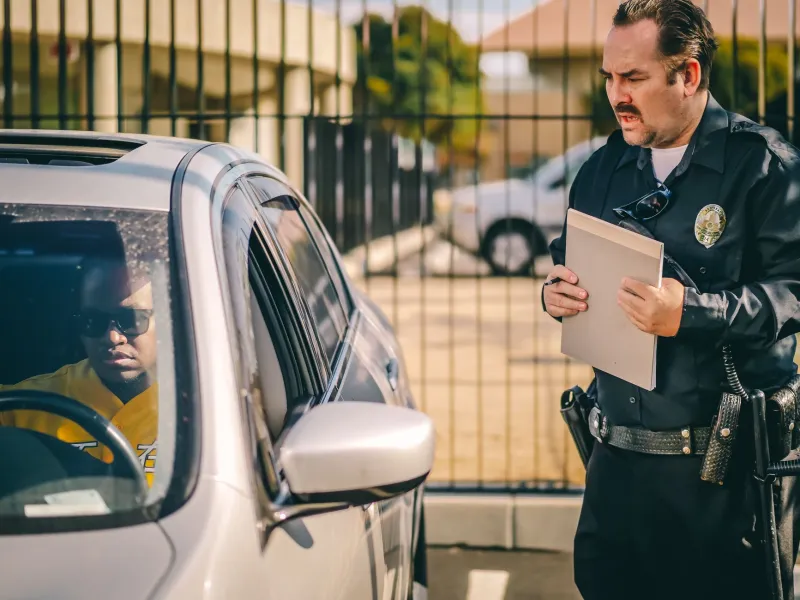
Most test candidates have driven for weeks or months without parallel parking in a high-stakes context. Even those who practice the skill in empty parking lots have rarely executed it with an examiner seated beside them, a clipboard in hand, and traffic potentially waiting behind. The result is a phenomenon sometimes called evaluation apprehension — a well-documented psychological response in which the awareness of being observed degrades performance on tasks that require fine motor control and spatial judgment.
The physical symptoms are familiar: elevated heart rate, slight tremor in the hands, a tendency to rush. Each of these responses directly undermines the slow, deliberate movements that successful parallel parking requires. The irony is that anxiety produces the exact opposite of what the task demands.
Recognizing this cycle before you encounter it is a meaningful advantage. When you feel the onset of that pressure during your test, a brief pause — adjusting your mirrors, taking a measured breath, positioning your vehicle — is not a sign of hesitation. It is a sign of control. Examiners understand that preparation takes a moment, and a composed setup almost always produces a cleaner execution.
What Examiners Are Scoring Beyond the Park Itself
Most state DMV scoring rubrics award or deduct points based on specific observable behaviors during parallel parking. These typically include:
- Checking mirrors and blind spots before and during the maneuver
- Signaling appropriately before pulling alongside the lead vehicle
- Maintaining safe clearance from curb and surrounding vehicles
- Not mounting the curb at any point during the maneuver
- Completing the park within a reasonable number of corrections
However, experienced examiners also form subjective impressions that inform how they interpret borderline moments elsewhere in the test. A candidate who parallel parks with deliberate, unhurried movements tends to receive more benefit of the doubt on a rolling stop or a wide turn than one who appeared flustered or impulsive during parking. This is not a formal scoring mechanism — it is human perception, and it is real.
A Tactical Framework for Test-Day Execution
Preparing for parallel parking specifically, rather than treating it as one item among many on a checklist, pays measurable dividends. The following framework reflects the approach we use at Redin Motor School with students preparing for their road tests.
Practice in conditions that simulate the test. Empty lots are useful for learning the sequence, but they do not replicate the evaluative pressure of the actual test. Ask a passenger to sit beside you and observe silently. Practice in residential streets with actual parked vehicles. The goal is to make the presence of an observer feel unremarkable.
Anchor to a consistent reference point. Rather than estimating distance visually each time, identify a reliable reference point on your vehicle — where the rear of the front vehicle aligns with your side mirror or door handle, for example — and use it consistently. Consistency reduces the guesswork that anxiety tends to amplify.
Slow down beyond what feels natural. Most errors in parallel parking occur because the driver is moving slightly too fast to make accurate steering adjustments. Deliberately reducing speed by half, even if it feels uncomfortably slow, almost always improves precision.
Treat corrections as part of the maneuver, not as failures. A single correction during parallel parking does not automatically result in a deduction. Attempting to avoid a correction by rushing the final position, however, often does result in curb contact or unsafe clearance. Accept that one adjustment is normal and proceed calmly.
The Broader Lesson
The parallel parking paradox, as many driving instructors describe it, is that a skill which feels like a narrow technical requirement is actually a measure of your entire approach to driving under pressure. Candidates who treat it as an isolated trick to memorize are consistently outperformed by those who understand it as an expression of broader vehicle control and composure.
Preparing with that understanding — not just practicing the sequence, but developing the spatial awareness, the measured pace, and the psychological steadiness that the maneuver demands — is what separates candidates who pass from those who are left wondering what went wrong. At Redin Motor School, we believe that confidence behind the wheel is built through preparation that goes deeper than checklists. Parallel parking is an excellent place to start.